Connect content strategy, landing pages and campaign delivery with lead capture, follow-up ownership and sales reporting, around your goals and team capacity.
Workflow · 02Prepare content, landing pages and follow-up.
Workflow · 03Execute with clear ownership and reporting.
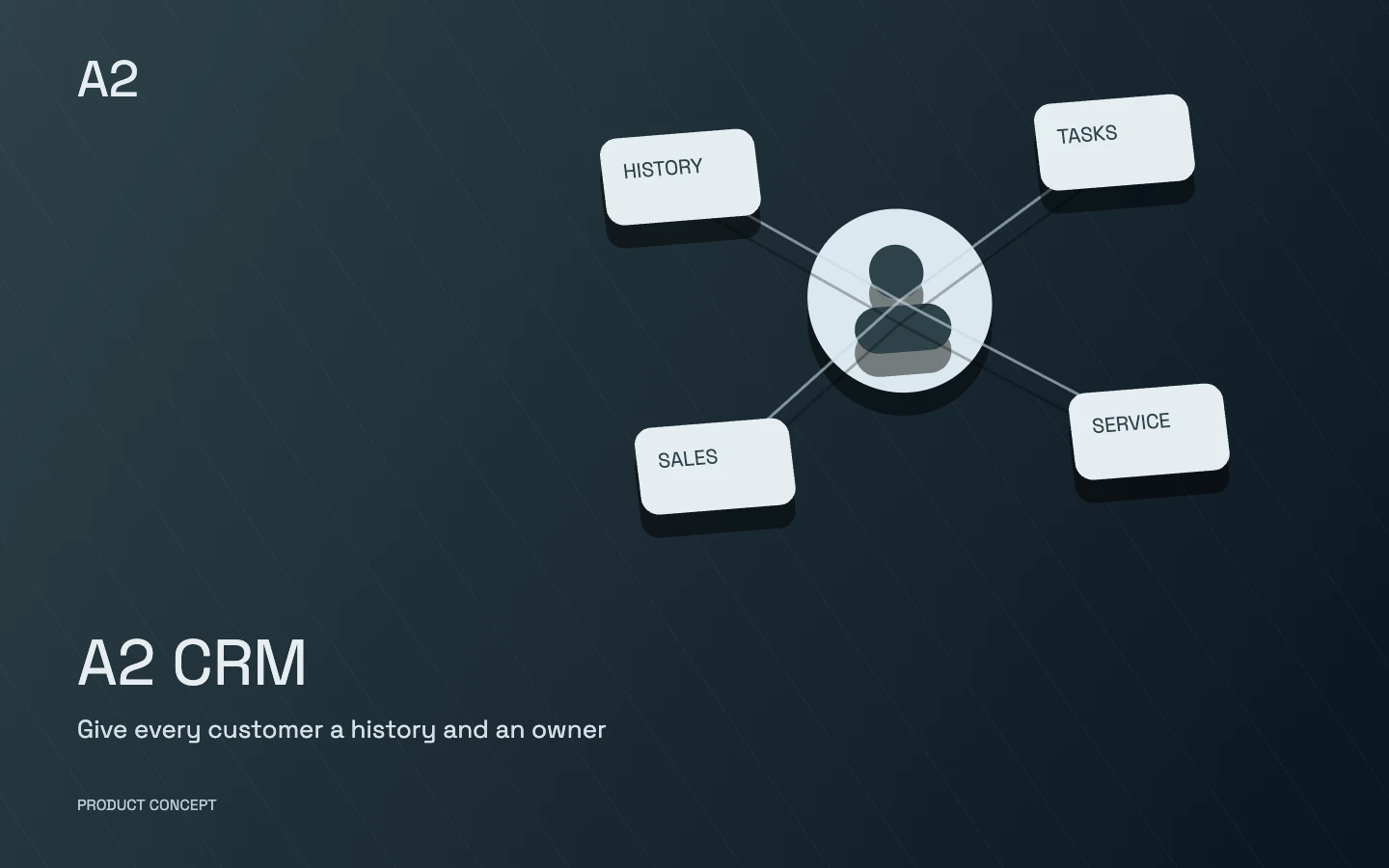
A conceptual product illustration, not customer data or a live application screen.
Who is it designed for?
Businesses that want marketing, the website and the sales team to work through a defined customer journey.
Each product’s modules and integrations are selected around your business and introduced in stages. Scope, roles and acceptance criteria are defined before delivery.
Explore the product in detail
Choose a capability to explore its scope and the work it brings together.
A workspace for each role
Business owner
Defines business goals and acquisition priorities.
Content and marketing team
Works on content, landing pages and campaign journeys.
Sales team
Follows leads and subsequent customer conversations.
Modules and capabilities
Open a section to explore its scope.
Goals and audience+
Start with the product, audience and the team’s response capacity.
Define the offer, audience and expected action
Choose measures tied to business goals
Content and messaging+
Use each page to answer an actual customer question.
Content structure, copy and an execution calendar
Consistent brand language across site and communication journeys
Landing pages and conversion+
Make the action and subsequent follow-up clear.
Design around the offer and traffic source
Forms, primary actions and handoff to sales
Campaign operations+
Run campaigns with defined ownership, content and reporting.
Plan stages and coordinate deliverables
Capture acquisition sources when reliable data is available
Follow-up and retention+
Connect acquisition information with ongoing customer conversations.
Connect leads with CRM records and an assigned owner
Plan subsequent communication around consent and customer status
Review and improvement+
Use reporting to inform the team’s next decision.
Review acquisition, actions and follow-up quality
Improve content and workflows using available evidence
An acquisition plan defining the audience, offer, channel priorities and evaluation measures
Selected content and landing pages, with an execution calendar and enquiry handoff to sales
A plan for source tracking, follow-up ownership and periodic reporting to improve activities using available data
Delivery experience behind the product
Marketing services and supporting sales tools are scoped around business goals and resources. Results are evaluated within the timeframe and measures defined for each project.
This family draws on A2’s development and integration capabilities. Your modules and delivery stages are defined during discovery.
We first review the audience, offer, next action and the team’s ability to respond. Content, SEO, landing pages or campaigns are then prioritized so incoming interest has a clear follow-up path.
How does marketing connect to sales?
Acquisition source, customer enquiry and follow-up ownership become part of the workflow. CRM connections and communication rules help the team see which request led to which action.
How are results assessed?
Measures, baseline, reporting period and data sources are agreed before execution. Visits, enquiries, follow-up and sales are interpreted within the available data; fixed search positions or guaranteed growth are not promised.
Start with your operation
Which product or service and customer segment should acquisition focus on?
Which channels bring customers today, and what data do you have about that journey?
How are new enquiries recorded, and who owns follow-up?
What budget, response capacity and evaluation timeframe can the team commit to?
Choose capabilities for our conversation
These choices describe your initial priorities. The final scope is defined together.
 A2 CRM Follow the link, or keep scrolling on desktop.